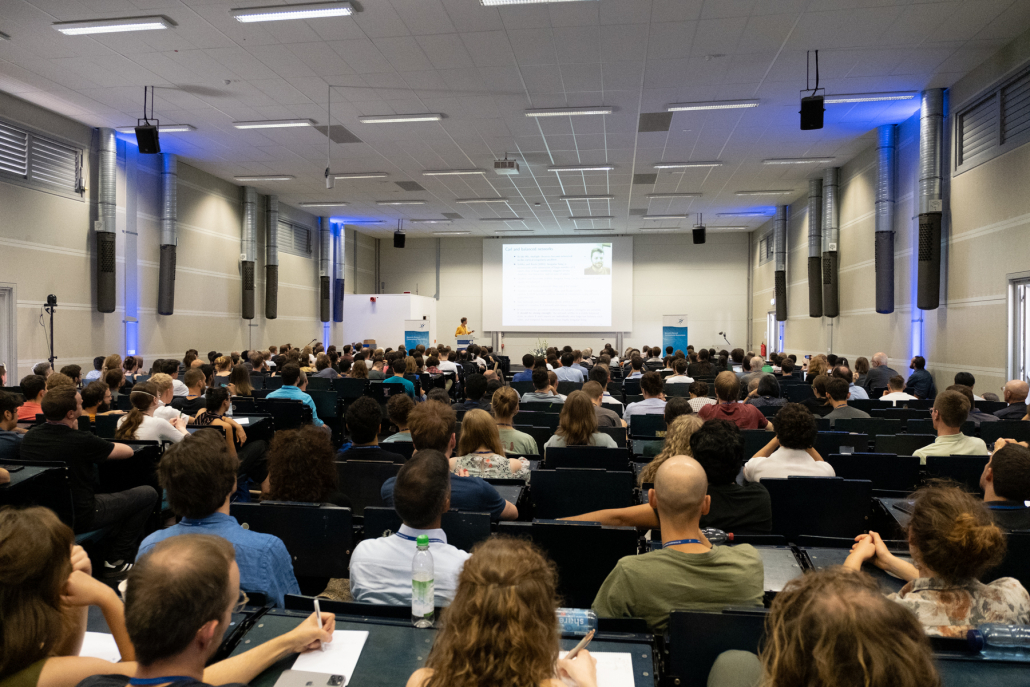
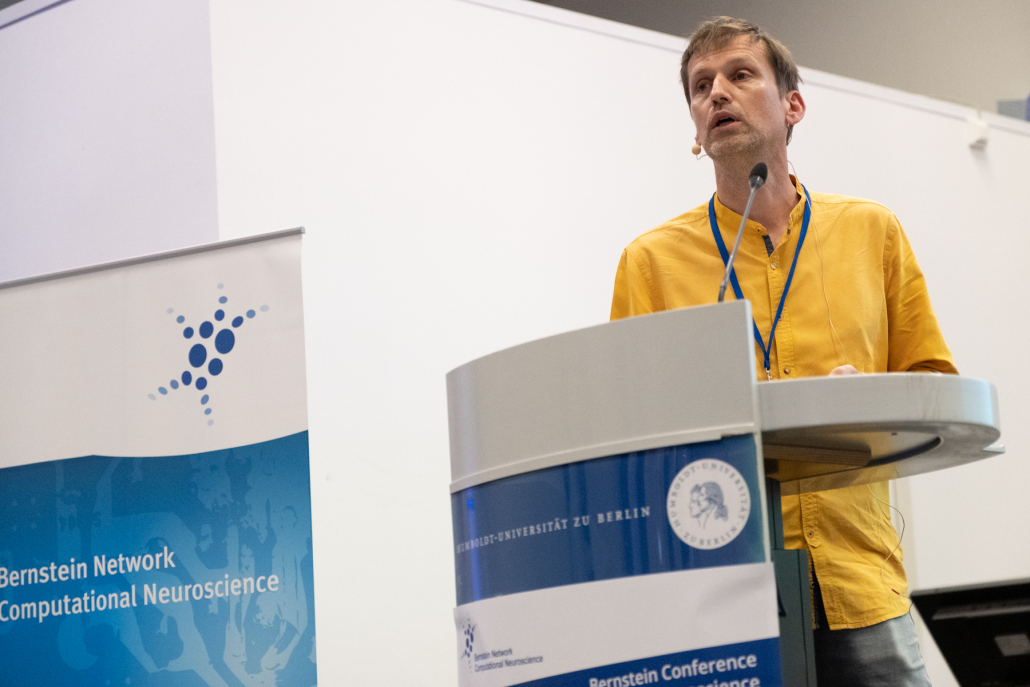
Bernstein Conference 2023
Tiago Branco | Sainsbury Wellcome Center, UK
Strategies and neural mechanisms for navigating to shelter during escape
Marlene Cohen | University of Chicago, USA
Visual mechanisms for flexible behavior
Stefano Fusi | Columbia University, USA
Disentangled representational geometries in human and non-human primates
Ann Kennedy | Northwestern University, USA
Neural population dynamics underlying hypothalamic regulation of motivated behavior
Julija Krupic | University of Cambridge, UK
Progressively increasing time horizons in grid cells and CA1 place cells
Wiktor Mlynarski | LMU Munich, Germany & Institute of Science and Technology Austria, Austria
Computational principles of dynamic sensory representations
Adrien Peyrache | McGill University, Canada
Learning a cognitive map
Kanaka Rajan | Harvard University, USA
Merging neural and behavioral modularity through compositional modes
Christopher Summerfield | University of Oxford & Deepmind, UK
Training neural networks to reason about scenes by integrating “what” and “where”
Julia Veit | Albert-Ludwigs-Universität Freiburg, Germany
Cortical VIP neurons locally control the gain but globally control the coherence of gamma band rhythms
Nicolas Brunel | Duke University, USA
Nicholas Edward Bush | Seattle Children’s Research Institute, USA
Latent neural population dynamics that govern breathing
Mattia Chini | University Medical Center Hamburg-Eppendorf, Germany
Skewness and oligarchy in the developing cortex
Ciana E Deveau | Brown University, USA
Selective amplification of sequences of neural activity by recurrent circuits of visual cortex
Timothy Doyeon Kim| Princeton University, USA
Flow-field inference from neural data using deep recurrent networks
Kathrin Pabst | Philipps-Universität Marburg, Germany
Integration of rotational optic flow in the desert locust compass-network: A dynamical firing rate model
NaYoung So | Columbia University, USA
Separate neural representations of the time and content of a decision?
Roxana Zeraati | University of Tübingen, Germany
Role of single-neuron and network-mediated timescales in recurrent neural networks solving long-memory tasks
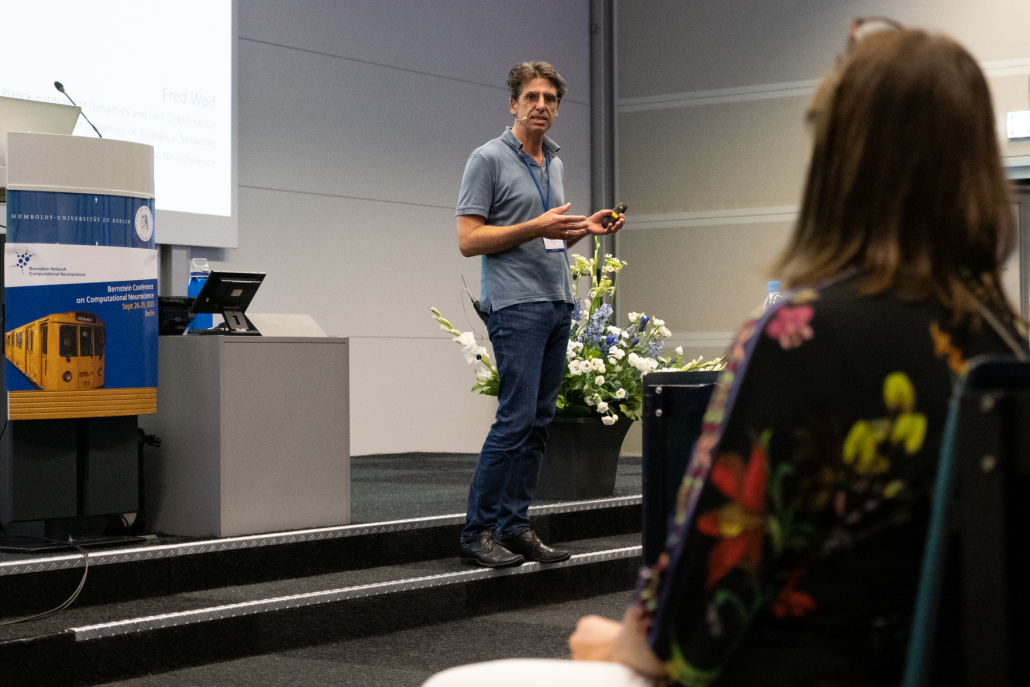
Fred Wolf | University of Göttingen, Germany
Sprunginnovation oder evolutionäre Hängepartie – Neues von den ersten Gehirnen
2nd workshop on symmetry, invariance and neural representations
Organizers: Simone Azeglio, Arianna Di Bernardo
Description:
The Second Workshop on Symmetry, Invariance, and Neural Representations at the Bernstein Conference 2023 seeks to encourage interdisciplinary research at the intersection of mathematics and neuroscience. The workshop will emphasize the significance of symmetries in the structure and function of the brain and present the latest research on neural population geometry, neural manifolds, embeddings of neural data, and invariant/equivariant neural representations in both biological and artificial networks. By incorporating geometric and topological features, along with symmetry, into the design of neural architectures, researchers can develop more interpretable and trainable models, leading to a more profound comprehension of the brain and its complexities. This ongoing research area has the potential to transform our understanding of neural computation and information processing, opening doors to more robust and efficient neural models. Building on the feedback and interaction with peers from the previous year, the second edition of this workshop will bring together researchers and students from various fields to promote cooperation and push forward this exciting research area.
Confirmed speakers:
Approaches for analyzing massively parallel neuronal data - Current and future
Organizers: Sonja Grün, Jonas Oberste-Frielinghaus
Description:
This session will present different approaches to analyze massively parallel neuronal data on the single neuron level in behaving animals during complex behavior. Several decades of research have clearly demonstrated that neurons do not act in isolation but achieve dynamic behavioral control in large networks that depend on neuronal interaction. To detect this interaction in living brains, large numbers of neurons must be recorded simultaneously to understand, e.g., how sensory-motor loops and behavioral control are organized at the level of populations of neurons.
Confirmed speakers:
Behavior across the tree of life
Organizers: Joram Keijser, Manuel Molano, Gily Ginosar
Description:
While modern neuroscience has made significant advances in understanding the neurobiological basis of behavior, many of these findings have been limited to a narrow set of model organisms performing laboratory tasks. However, behavior has evolved across different species and under various environmental conditions, presenting a wealth of insights into the underlying neural mechanisms of natural behaviors. In this workshop, we propose a comparative approach that looks at behaviors across different phylogenetic branches, from bats to naked mole rats to elephants. By examining the similarities and differences of behaviors in these species, we can gain a deeper understanding of the neurobiological basis of behavior and the evolution of neural circuits across different lineages. Our goal is to bring together neuroscientists who study ecologically-relevant behaviors in a range of species, providing a broader perspective on behavior. We believe that this approach will inspire new ways of thinking about behavior and the brain within the computational neuroscience community.
Confirmed speakers:
Behavioral flexibility and its neural correlates
Organizers: Caroline Haimerl, Laura Bella Naumann, Cristina Savin
Description:
Humans and other animals can adapt their behavior to complex and ever-changing environments. They can switch tasks that require different sensory information and quickly learn new tasks without affecting the existing behavioral repertoire. The neural mechanisms that enable this behavioral flexibility are still unclear. Numerous neurons and their connections work in concert to process sensory information and produce appropriate behavioral responses.
Jointly reorganizing them for a new task or context seems daunting and inefficient. Thus, other fast and transient mechanisms must exist that temporarily modulate the way information is processed to support the task at hand. The proposed workshop brings together experimental and theoretical researchers studying flexible and adaptive behavior across different sensory modalities and species.
The goal is to review the most up-to-date empirical evidence and theoretical ideas of underlying neural mechanisms, identify common themes across approaches and species, and thus determine promising future directions for the study of flexible behavior at the neural level.
Confirmed speakers:
Biologically plausible learning in artificial neural networks
Organizers: Mattia Della Vecchia, Leonardo Agueci
Description:
Artificial neural networks have been a crucial tool in neuroscience to understand brain functions, and major advances in artificial intelligence have led to methods that excel in a wide range of specific tasks, sometimes outperforming animal capabilities. Yet these systems do not show characteristic elements of animal intelligence, such as adaptability to new situations, transfer of knowledge across different tasks, or generalization from limited observations. On the other hand, our understanding of how the brain acquires these mechanisms is still limited, and this makes it unclear in which direction it should be taken moving forward. Some researchers argue that it is important to enrich artificial neural networks with biological components to study the underlying processes in the brain, while others are skeptical, highlighting the differences between the two. The debate revolves around questions like what levels of biological abstraction are possible, why we should take biological plausibility into consideration, or which biological elements are the most important to include.
The goal of the workshop is to bring together experts who work on expanding our comprehension of neural computations and learning mechanisms, in order to foster a discussion on how biological constraints in computational models can provide neuroscientists with insights into brain functions, and how these insights could influence future developments of artificial neural networks. The workshop will be divided into two mini-sessions, each one followed by a panel discussion, whose themes will be:
Confirmed speakers:
Brain inspiration in neuromorphic computing
Organizers: Emre Neftci, Tobias Gemmeke
Description:
Neuromorphic computing has gained significant traction in the last decade, encompassing a diverse array of research areas ranging from artificial neural networks to reproductions of biological neural networks. The importance of understanding the principles of brain computation and incorporating them into artificial systems, such as conventional computers or dedicated neuromorphic hardware, is often thought to be critical to advance AI technologies. However, with the advent of powerful vision and language neural network models, the necessity and degree of brain inspiration to achieve intelligence has become a subject of debate. Despite this, the human brain consumes far less energy for similar tasks as current AI while demonstrating greater resilience to ambiguous cues and physical damage. This raises important questions: In which tasks and metrics do brain-inspired, embodied, or physics-based computing outperform conventional computers and theories? Can brain-inspired solutions enhance state-of-the-art artificial neural networks, or do they require fundamentally different architectures? This workshop aims to stimulate an interdisciplinary discussion on the significance of neuroscience-inspired approaches in developing novel computing paradigms.
Confirmed speakers:
Hardwired or adaptive? Bridging neural circuit evolution, development and learning
Organizers: Lucas Rudelt, Dániel Barabási, André Ferreira Castro
Description:
Neural circuit formation shows a puzzling diversity: Some circuits are strikingly stereotypical and hardwired, whereas other circuits are highly variable, either due to substantial developmental noise or activity-dependent plasticity and learning. This has somewhat divided the field, where theories of plasticity and learning often do not consider the role of innate behavior and developmental priors, and developmental models have often ignored how learning and plasticity may help to achieve phenotypic robustness, while also enabling adaptation to changing environments. This interdisciplinary workshop will bring together experts in neural circuit evolution, function, development, and learning to explore the complex relationship between genetically-encoded hardwiring, developmental noise, and plasticity. The event aims to address questions about when learning is necessary, which circuit functions can be hardwired throughout evolution, and how learning and development interact.
Confirmed speakers:
How can machine learning be used to generate insights and theories in neuroscience?
Organizers: Alexander Ecker, Fabian Sinz, Mohammad Bashiri, Pavithra Elumali, Michaela Vystrcilová
Description:
Machine Learning (ML) as a tool for investigating the mechanisms underlying brain function has been a topic of intense debate in recent years. Some researchers argue that ML and Artificial Neural Networks (ANNs) as models of the brain can offer deep insights into the computations carried out by neuronal populations, while others view these models as black boxes that provide only a limited understanding of neural processes. With this workshop, we aim to bring together experts from both sides of this debate for a stimulating and productive discussion. Our goal is to explore the potential of ML for generating concrete theories and insights in neuroscience. To facilitate this conversation, we have invited a diverse group of speakers with contrasting perspectives on the topic. Each speaker will deliver a talk presenting their views and research findings, followed by a panel discussion moderated by Paul Middlebrooks, the host of the Brain Inspired podcast.
Confirmed speakers:
Interrogating the ties that bind: Relationship between multi-level network connectivity and neural dynamics
Organizers: David Dahmen, Yuxiu Shao, Yue Kris Wu
Description:
There is a growing consensus that including experimentally identified connectivity constraints in computational models of neuronal networks is imperative to understand how brain computations are performed through emergent neural dynamics. However, how network connectivity, both at the microscopic level between individual neurons and at the macroscopic level between different cell types, shapes neural dynamics and is shaped by neural dynamics via activity-dependent plasticity mechanisms remains largely elusive. This workshop aims to bring together experts from experimental as well as theoretical neuroscience to discuss and address the following key aspects of network connectivity, dynamics, and computation: 1. Recent advancements in quantifying microscopic motifs and macroscopic structure in neural circuits. 2. Impact of microscopic motifs and macroscopic structure on neural dynamics and computation. 3. Impact of synaptic plasticity mechanisms on microscopic and macroscopic circuit structure. As understanding how network connectivity at different levels affects neural dynamics and computation is crucial in neuroscience, we hope for a lively discussion at this workshop that will be of broad interest to both experimentalists and theorists.
Confirmed speakers:
Multi-modal understanding of brain and behavior
Organizers: Shervin Safavi, Roxana Zeraati
Description:
The brain operates across multiple interacting scales that are duly measured with different recording modalities: From genes (measured by transcriptomics) defining the role of individual neurons, to the activity of individual and populations of neurons (measured by electrophysiology or Ca imaging), and eventually interacting brain areas forming the whole brain dynamics (measured by neuroimaging techniques such as fMRI). Different modalities provide insights into different aspects of brain function. Large-scale modalities are more helpful in understanding the principles of brain computation, whereas smaller-scale modalities provide better insights into underlying circuit mechanisms. Hence, to fully understand the mechanisms underlying brain function and ultimately behavior, we need to study different modalities simultaneously and uncover their relation to each other and to behavior.
In this workshop, we bring together a unique group of experimental and computational experts who develop multi-modal and multi-scale experimental techniques, analysis methods, and computational models to understand various cognitive functions. Our speakers will discuss how multi-modal measurements and large-scale population recordings have transformed our understanding of brain function on a fundamental level, linking neural dynamics across different scales (from genes to the whole brain and behavior). They will introduce novel analysis methods and machine-learning techniques to uncover interpretable structures in such high-dimensional neural and behavioral data, and link neural signals that not only have different spatiotemporal resolutions but also distinct mathematical natures (point processes versus continuous signals). Moreover, they will explain how computational models can link cellular and network mechanisms across different scales to form theories about multi-scale mechanisms underlying neural computation and behavior. Our aim is to stimulate discussions on the benefits and challenges of multi-modal studying of brain dynamics (more details in the attached schedule). We believe the complementary perspectives of our speakers, synergized with discussions in our workshop, would promote new research directions and collaborations that will broaden the extent of multi-modal brain research (e.g., using multi-modal data to build multi-scale models) to gain a more holistic understanding of brain function and cognition.
Confirmed speakers:
Whole brain dynamics: Modeling and applications
Organizers: Victor Buendia Ruiz-Azuaga, Ana Paula Millán Vidal
Description:
Technologies such as magnetic resonance or magnetoencephalography have enabled us to record brain activity at a large scale with high spatial — and more recently, also temporal — resolution. Understanding the dynamics of neural activity is essential in order to unveil how the brain computes and processes information in a holistic manner. This research approach has proven to be very useful for clinical applications, which include the study of neurodegenerative diseases, ageing, or epilepsy. However, many features of the observed activity patterns remain unexplained. Computational models at a large scale are an invaluable tool for rationalizing experimental observations by combining structural data of brain connectivity with reduced, effective dynamical models. In this workshop, we aim to bring together the European community of researchers studying different approaches to modeling whole-brain activity. From basic principles to the most recent applications, the idea is to have a space of discussion and exchange of ideas to overcome some of the current challenges of the field, such as the difficulty of parameter estimation from recordings, the structure-function dichotomy, limitations of the dynamical systems currently used, or the comparison between datasets obtained with different techniques.
Confirmed speakers: