
Funding lines, awards, programs. Find a selection of current calls related to computational neuroscience and the Bernstein Network.

Calls
Calls
DFG Priority Programmes
The Priority Programmes aim to give clear impetus to the advancement of science and the humanities through coordinated multi-location funding for important new topics
Deadline: October 15, 2026
Second deadline: October 15, 2027
Addressees: Researchers with a doctorate from all disciplines who work at a research institution in Germany or at a German research institution abroad
Brain Awareness Week 2027 – FENS-Dana grants
Every year, on behalf of the Dana Foundation, FENS offers financial support of up to EUR 1,000 to Brain Awareness Week event organisers in Europe.
Deadline: October 15, 2026
Addressees: Organizers of BAW activities in Europe

FENS/IBRO-PERC Exchange Fellowships Programme
FENS and IBRO-PERC are offering funding of up to EUR 4.000 each to early career researchers interested in participating in cross-border laboratory visits. FENS and the IBRO Pan-Europe Regional Committee (IBRO-PERC) are dedicated to supporting early career researchers and promoting intra-European mobility. The FENS/IBRO-PERC Exchange Fellowships Programme is designed to advance neuroscience research and training in Europe by enabling master or PhD students and early postdoctoral fellows to broaden their methodological expertise through targeted laboratory visits.
Deadline: October 15, 2026
Addressees: Master or PhD students, or early postdoctoral fellows

Schilling Research Award of the German Neuroscience Society 2027
This prize is awarded by the NWG, biennial in the odd years, for outstanding achievements in the field of brain research. The prize of 20,000 Euro is intended to support young scientists up to 5 years after completion of the thesis considering individual conditions as specified in the DFG regulations.
A prerequisite for a successful application is outstanding research work documented by publications. The candidate should work in a German laboratory or work as a German abroad. Both self-applications and nominations are invited. Applications from all areas of neuroscience are welcome. Membership in the GNS is not mandatory. The prize will be awarded at the Göttingen meeting ( 17 – 19 March 2027), where the prize winner will give a lecture.
Deadline: October 15, 2026
Addressees: Young scientists up to 5 years after completing their PhD, working in a German laboratory or as a German abroad

Scholarships for doctoral students
Are you looking for funding to realise your doctoral project? Do your previous study and examination achievements demonstrate a special ability with regard to academic work? Is your work making a significant contribution to research? Then become a doctoral scholarship holder of the Friedrich Naumann Foundation for Freedom! We support around 150 doctoral students from all disciplines annually who are working on a convincing and innovative research project and have been admitted to a doctoral programme at a university.
Deadline: October 31, 2026
Second deadline: April 30, 2027
Addressees: Prospective PhD students at German universities
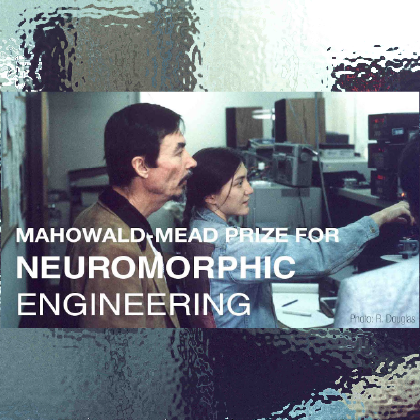
Mahowald-Mead Prizes for Neuromorphic Engineering
The Mahowald-Mead Prize (MMP) recognizes outstanding research in neuromorphic engineering, worldwide. The Prize is named for the late Misha Mahowald and Carver Mead, the most influential pioneers of the field of neuromorphic engineering. The award is considered annually. The Mahowald Early Career Award (MECA) has been established for individual Master's, PhD, and early postdoctoral students. It is open for submissions year-round, and evaluated once per year. Individuals or groups are invited to submit a description of their work, or nominate the work of others, for consideration by the jury of world-leading figures in the field.
Deadline: October 31, 2026
Second deadline: October 31, 2027
Addressees: Any individual or research team worldwide

Forschungsstipendien für promovierte Nachwuchswissenschaftlerinnen und -wissenschaftler (Postdoc-Programm) – Kurzstipendien
Ziel des Programms ist es, hochqualifizierten Nachwuchsforscherinnen und -forschern die Durchführung eines selbstgewählten Forschungsvorhabens im Ausland und damit einen wichtigen Qualifizierungsschritt für die spätere Berufslaufbahn in Wissenschaft, Wirtschaft oder im Kulturbereich in Deutschland zu ermöglichen. Gefördert werden Forschungsaufenthalte (3-6 Monate) in allen Fachrichtungen an einem selbst gewählten Gastinstitut im Ausland. Innerhalb des Förderzeitraums sind Aufenthalte in mehreren Ländern oder in mehreren wissenschaftlichen Einrichtungen innerhalb eines Landes möglich.
Deadline: November 6, 2026
Second deadline: February 26, 2027
Addressees: Postdocs in Deutschland, deren Promotion nicht länger als vier Jahre zurückliegt
Forschungsstipendien für Doktorandinnen und Doktoranden
Dieses Programm fördert Forschungsaufenthalte im Ausland während einer Promotion in Deutschland. Die Auslandsaufenthalte können zwischen einem und zwölf Monaten betragen. Der Förderzeitraum kann zeitlich aufgeteilt werden und auch in verschiedenen Ländern stattfinden.
Deadline: November 16, 2026
Second deadline: March 15, 2027
Addressees: Promovierende in Deutschland
CNV-Stiftung Scholarships
The CNV Foundation supports outstanding female scientists in the fields of the experimental natural sciences and basic medical research who are also raising children. It aims to enable them to create the freedom and mobility required to further their scientific careers. The Foundation wishes to help prevent science from losing excellent talent. It is aimed specifically at graduate students and postdoctoral fellows in the fields of experimental natural sciences and medicine. The funding amounts to €500 per month for a period of one year.
Deadline: November 30, 2026
Second deadline: November 30, 2027
Addressees: Female PhD students and Postdocs with children
NITMB Focused Research Group Awards
This program supports small groups of researchers (for example, 3-6) from multiple institutions who gather at NITMB for up to 9 days to pursue ambitious research projects at the interface of mathematics, theory, computation, and biology. Groups may apply for return visits to continue their work. Award funding includes round-trip travel to and from NITMB and participants’ home institutions located more than 50 miles away (GSA rates apply), as well as local lodging and subsistence expenses, subject to NITMB reimbursement policies. NITMB also provides office space and meeting rooms for participants. Applications are open to all areas of theory, mathematics, and computation, and all areas of biological sciences. We welcome researchers investigating topics that have not previously been explored.
Deadline: November 30, 2026
Second deadline: March 30, 2027
Addressees: Faculty, research faculty, technical staff, postdoctoral scholars, and enrolled Ph.D. candidates from research institutions or national laboratories in the U.S. and abroad

Lower Saxony Impulse Professorship
The "Lower Saxony Impulse Professorship" addresses academics approaching the end of their early career phase up to a maximum of ten years after completing their doctorate. It is intended to support universities in the state of Lower Saxony in their efforts to attract and retain early career researchers – thereby consolidating Lower Saxony as a science location.
The program addresses academics approaching the end of the early career phase up to a maximum of ten years after completing their doctorate. The funding is intended to increase their promising career potential in terms of disciplinary expertise as well as their capacity to shape research profiles and structures. In this light, it seeks to boost their potential for future leadership roles ("rising stars").
Deadline: December 1, 2026
Addressees: Academics whose doctorate was awarded up to 10 years ago

The Shanahan Foundation Fellowship at the Interface of Data and Neuroscience
The Shanahan Foundation Fellowship at the Interface of Data and Neuroscience was created to provide freedom and flexibility to promising young scientists from diverse fields, as they work alongside neuroscientists at the Allen Institute and University of Washington. The three-year fellowship provides Ph.D.s from data science, computer science, physics, mathematics, and allied fields the guidance to pursue their own research interests with our data, with help from dedicated mentors.
Deadline: December 1, 2026
Addressees: Early-career researchers up to 3 years after completion of their PhD in a quantitative field
DFG Research Units
A Research Unit is a close-knit, medium-term collaborative alliance consisting of several outstanding researchers who work together on a joint research project. The project’s thematic focus, duration and – in some cases – funding requirements go well beyond what is possible under individual grants such as research grants or Priority Programmes. Funding for Research Units aims to provide the required personnel and material resources for a medium-term close cooperation, usually designed to last eight years. Research Units often contribute to establishing new research directions. The same quality criteria apply as for research grants. A Research Unit typically comprises fewer than ten projects which are coordinated so as to enable work on a common research topic. The majority of the research projects are to be based at universities.
Deadline: December 31, 2026
Addressees: Researchers in all disciplines at German research institutions who have completed their academic training (as a rule, those holding a doctorate)

Lower Saxony Professorship
The "Lower Saxony Professorship" addresses exceptional academics who are professionally excellent and have several years of (management) experience in the science system. They are expected to have the capacity to shape the profile and structure of their university location and impact the research region at large.
Deadline: December 31, 2026
Second deadline: December 31, 2027
Addressees: Scientists with a doctorate
Reinhart Koselleck Projects
Interdisciplinary research is often particularly challenging and requires special efforts at newly emerging interfaces. In order to create an additional opportunity for interdisciplinary research and to make the achievements of scientists who conduct research at scientific boundaries more visible, the Deutsche Forschungsgemeinschaft (DFG, German Research Foundation) launches an open call under the Reinhart Koselleck programme. The aim is to enable outstanding researchers with a proven scientific track record to pursue exceptionally interdisciplinary and innovative projects.
Deadline: December 31, 2026
Second deadline: December 31, 2027
Addressees: Scientists with or eligible for a professorship
Heisenberg Program
If you already meet all the requirements for appointment to a permanent professorship, you can apply to the Heisenberg Programme. While you prepare for a future senior academic role, the DFG provides funding to enable you to carry on with high-quality research at the institution of your choice and continue building your academic reputation.
The Heisenberg Programme is directed primarily at those researchers who have qualified for professorship via the Emmy Noether Programme, leadership of a junior research group, DFG project staff positions, private-sector research or mid-level faculty positions. The target group also includes junior professors who have received positive evaluations, those who have achieved their habilitation or an equivalent qualification, and German researchers returning from abroad, as well as appropriately qualified foreign researchers (who have not yet achieved a full professorship) looking to pursue careers in Germany.
Deadline: December 31, 2026
Second deadline: December 31, 2027
Addressees: Researchers eligible for a professorship
Emmy Noether Program
The Emmy Noether Programme gives exceptionally qualified early career researchers the chance to qualify for the post of professor at a university by leading an independent junior research group for a period of six years.
Deadline: December 31, 2026
Second deadline: December 31, 2027
Addressees: Early-career researchers up to 4 years after completion of their doctorate
Walter Benjamin Programme
The Walter Benjamin Programme enables researchers in the postdoctoral training phase to independently conduct their own research project at a location of their choice for up to two years. The project can be carried out at a research institution in Germany or abroad, with the host institution providing support for the project.
Deadline: December 31, 2026
Second deadline: December 31, 2027
Addressees: Early-career postdocs
Joint Proposal Submission with Researchers Abroad under a Standing Open Procedure (SOP)
In principle, researchers at a German institution in Germany and abroad can always submit a research project proposal (usually Individual Research Grants Programme ) with international participation if the appropriate co-financing is available.
Deadline: December 31, 2026
Second deadline: December 31, 2027
Addressees: Scientists with a doctorate

NSTC (Taiwan) Research Fellowships for researchers from Germany
The NSTC (Taiwan) Research Fellowship supports you as a highly qualified postdoc or experienced researcher from Germany in conducting your research in Taiwan – regardless of discipline. The Taiwanese NSTC funds up to two three- to twelve-month research stays annually; these stays can potentially be extended up to a total duration of three years. Applicants are pre-selected by the Humboldt Foundation. If you would like to apply for a NSTC (Taiwan) Research Fellowship, you will require an academic host who has previously received project funding from the National Science and Technology Council (NSTC), Taiwan. Individuals with whom you are in a close personal (marriage or civil partnership) or familial (parents, siblings, children) relationship cannot be selected as hosts.
Deadline: December 31, 2026
Addressees: German researchers up to 12 years after their PhD
Feodor Lynen Research Fellowship
Attention, researchers from Germany! The Feodor Lynen Research Fellowship supports you – postdoctoral and experienced researchers – with your research abroad. As president of the Alexander von Humboldt Foundation, biochemist and Nobel Laureate Feodor Lynen advocated opening up the international Humboldt Network to junior researchers from Germany. The fellowship named after him is granted by the Alexander von Humboldt Foundation with funding from the Federal Ministry of Education and Research and enables researchers with above-average qualifications from Germany at all career levels and in all disciplines to conduct research with members of the Humboldt Network around the world.
Deadline: December 31, 2026
Addressees: German postdocs
IFI – Internationale Forschungsaufenthalte für Informatikerinnen und Informatiker – Förderlinie Promovierende
Ziel des Programms ist die Förderung von Forschungsaufenthalten hochqualifizierter deutscher Nachwuchsforscherinnen und -forscher auf dem Gebiet der Künstlichen Intelligenz sowie allgemein der Informatik und angrenzender Gebiete an einem IFI-Partnerinstitut. Eine Bewerbung ist jederzeit möglich, muss aber spätestens zwei Monate vor dem gewünschten Förderbeginn eingereicht werden. Das Stipendium kann bei erfolgreicher Bewerbung jeweils zum Monatsanfang angetreten werden.
Deadline: December 31, 2026
Second deadline: December 31, 2027
Addressees: Promovierende an einer deutschen Hochschule oder Forschungseinrichtung
IFI – Internationale Forschungsaufenthalte für Informatikerinnen und Informatiker – Förderlinie Postdocs
Ziel des Programms ist die Förderung von Forschungsaufenthalten hochqualifizierter deutscher Nachwuchsforscherinnen und -forscher auf dem Gebiet der Künstlichen Intelligenz sowie allgemein der Informatik und angrenzender Gebiete an einem Partnerinstitut. Die Stipendien werden in der Regel für die Dauer von 3 bis 24 Monaten vergeben. Eine Bewerbung ist jederzeit möglich, muss aber spätestens zwei Monate vor dem gewünschten Förderbeginn eingereicht werden.
Deadline: December 31, 2026
Second deadline: December 31, 2027
Addressees: Postdocs an einer deutschen Universität oder Forschungsinstitution, deren Promotion nicht länger als vier Jahre zurückliegt
Simons Foundation: Fellows-to-Faculty Award
The Simons Foundation’s Autism & Neuroscience division has opened applications for the 2027 Fellows-to-Faculty Award program, which helps early-career scientists transition into tenure-track faculty positions through funding, career development and mentorship. Fellows receive a commitment for a three-year, $600,000 faculty research grant, up to two years of postdoctoral support while they are on the job market, and access to professional development opportunities and a network of investigators.
Deadline: January 13, 2027
Addressees: PhD/MD holders seeking tenure-track research faculty positions
Momentum – Funding for Recently Tenured Professors
Here, 'momentum' is meant as an impulse to keep something moving or developing dynamically after it has started. In this sense, the initiative addresses academics at an early stage following the appointment to their first tenured professorship. The goal is to open up opportunities in this phase of their career to advance the content and strategic development of their professorship.
Deadline: April 6, 2027
Second deadline: April 4, 2028
Addressees: Professors three to five years after taking up their first tenured professorship at a university

Life Sciences Bridge Award
Mit unserem Wissenschaftspreis im Bereich der Lebenswissenschaften, dem „Life Sciences Bridge Award“, fördern wir begabte Nachwuchswissenschaftlerinnen und Nachwuchswissenschaftler, um ihnen ein selbstständiges wissenschaftliches Arbeiten zu ermöglichen.
Deadline: April 30, 2027
Addressees: Promovierte Wissenschaftler:innen, die noch keine unbefristete Professur innehaben
Follow us on