Advancing neuroscience through high-performance computing
Sandra Díaz has led the Simulation Laboratory Neuroscience (SDLN) at Forschungszentrum Jülich since 2023. The laboratory also serves as the Bernstein Facility for High Performance Simulation and Data Analysis. In this interview, she discusses her unconventional path into neuroscience, the growing role of high-performance computing in the field, and how the SDLN supports researchers across the Bernstein Network.
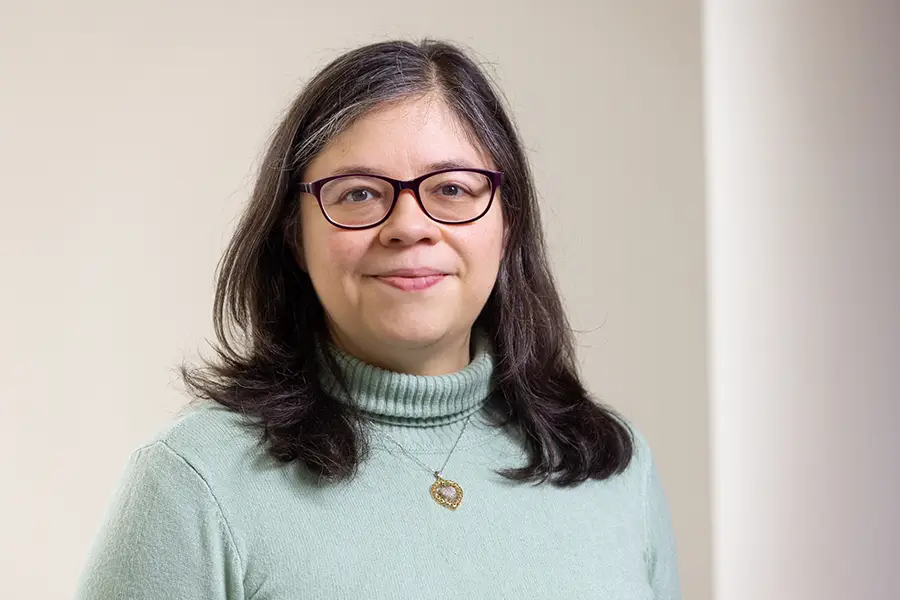
Sandra Díaz. © Forschungszentrum Jülich GmbH
BN, Reiriz Martínez: Dr. Díaz, thank you for joining us. You come from a background in engineering and computer science. What motivated you to move into the life sciences, and specifically into neuroscience? Were you always interested in the brain?
Sandra Díaz: The story starts when I was very little. I grew up in a household where chips, resistors, and transistors were always lying around, because my father is a classic analogue electronics engineer. But he was also a pioneer of biomedical engineering in Mexico, and from the beginning of my life that really struck a chord with me — I always wanted to maintain a connection with this engineering side but also with biology and, in particular, the brain.
When I had to choose my path, I decided to study electronic systems engineering, to build a foundation in mathematics and applied physics that would also allow me to understand living systems. I also specialized in biomedical engineering, studying things like bioimaging and interfaces. After some time in industry, I had the chance to do a master’s degree in computer science with a focus in quantum computing — which was an emerging technology at the time — and a second one in biomedical engineering. That took me to Canada, to work at the regional cancer hospital in Thunder Bay. There, I developed computational techniques to simulate how high-intensity focused ultrasound can be used to treat brain tumors — trying to understand how sound waves propagate through brain tissue. It was a very rewarding experience to work in a hospital environment, combining the computational and the patient sides.
My plan was to continue with a PhD, but the program unfortunately was not offered that year. At that point I had to decide whether to stay in Canada, living on a scholarship with my young child, or return to Mexico and look for a different opportunity — which is what I did.
Shortly afterwards, the opportunity to join the SDLN came along. We then moved to Germany, where we have since found a home, and I was finally able to transition into computational neuroscience.
And why neuroscience in particular?
I’ve always been fascinated by the brain, especially by brain development and the process of learning. In the early stages of my career, I wanted to focus on working with computer-human interfaces, to try to enhance human capabilities, but also to help people heal from different disorders and have a better quality of life. That has motivated me from the very beginning.
When did you move to Germany to join the SDLN for your PhD?
I started at the SDLN in 2014; there, I completed my PhD under the supervision of Abigail Morrison.
The SDLN opened in 2013, so you have been there almost from the very beginning. What did you observe in the ten years in between starting your PhD and now leading the lab? How have things changed?
When I first started, my view was a lot narrower. Being part of the SDLN group really helped me, since it works like a hub: other groups get in touch to try to solve different problems in neuroscience, and the SDLN supports them with expertise in computing and simulation. I was exposed to so many different groups, ways of thinking, and areas of neuroscience — not only computational, but also experimental neuroscience, neuroimaging, or even neuromorphic computing.
From my point of view, neuroscientists back then were less aware of what high-performance computing (HPC) could do for the field. Today, it’s no longer an option to ignore HPC or computing resources. Current trends — such as artificial intelligence, big data analysis, and increasingly complex mechanistic and data-driven models that help explain phenomena across different scales in the brain — make computing an essential skill and tool for neuroscientists.
Do you have any specific examples of how HPC can accelerate research in neuroscience?
We can start with the data. Our experimental colleagues spend hours in the lab collecting information from in vitro or in vivo experiments, and the amount of multimodal data keeps growing. With HPC, we can now analyze these datasets more thoroughly and extract features that were previously difficult to detect.
A second key area is the integration of data into mathematical models, which is central to computational neuroscience. This involves extracting essential features from the data and incorporating them into models that we can analyze and manipulate. HPC enables neuroscientists to explore much more complex models that require significant computing power. It also allows simulations over longer time spans, helping us understand how models evolve over time, as well as how they respond to different inputs or stimuli. In the past, such simulations were severely restricted by computational power and could take even months to run, but now we can obtain results much faster.
Another important aspect is identifying suitable model parameters — for example, those governing network connectivity, dynamics, or learning. In the past, this often involved students manually searching for configurations that reproduce biological observations. Today, we can define these criteria mathematically and use supercomputers to explore large parameter spaces systematically. This can even challenge our assumptions, revealing factors we may have overlooked.
Finally, we have new methods to analyze the outputs of the simulations and visualize the data, to then give feedback to our experimental colleagues.
Overall, HPC provides a shared framework for generating and testing hypotheses in silico, contributing to a more integrated understanding of the brain.
You succeeded Abigail Morrison as SDLN Scientific Lead in 2023. What does it feel like to take on this role? Did you come into it with a specific mission?
It is a great opportunity. I’m very grateful for the chance to lead such a dedicated group of scientists, who are committed to developing new methods and supporting our colleagues across different areas of research.
When I started in the role, I focused on two main priorities. The first one was addressing new challenges emerging in the field — for example, new trends in artificial intelligence, digital twinning, and questions around access to personal data. The second was ensuring that the SDLN remains an excellent and supportive place to work, by continuing to build on existing collaborations, and providing strong support to our colleagues.
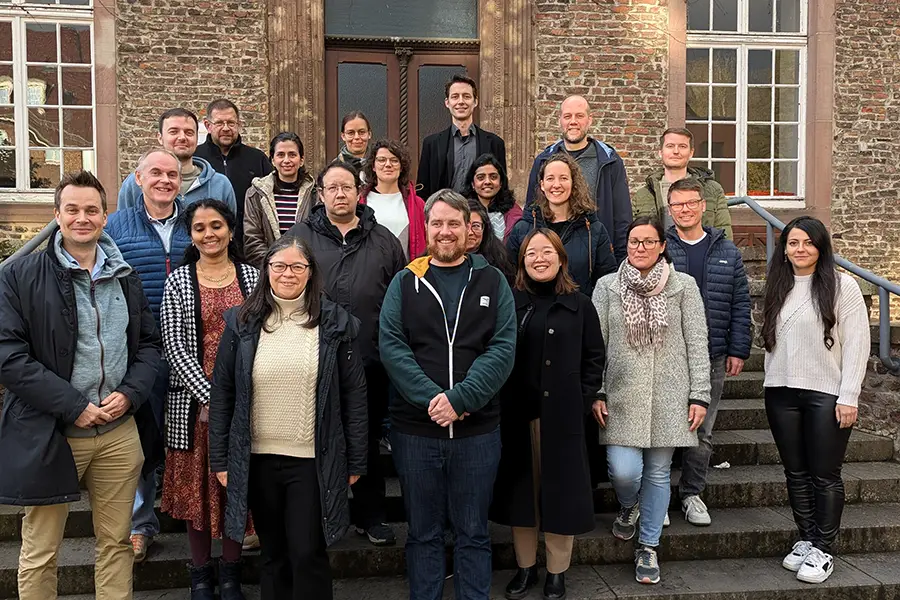 The SDLN team. © Simulation and Data Lab Neuroscience
Now that you are two years into the role, is there anything that has surprised you?
I’m very happy with how things are developing. Of course, new challenges continue to emerge. For example, we are diving deeper into new computing architectures, such as neuromorphic or quantum computing. Addressing problems with clinical applications, particularly in combination with AI, requires not only technical expertise but also a solid understanding of legal and ethical considerations. We are also very excited about JUPITER, the new exascale machine at the Jülich Supercomputing Centre, and we look forward to helping our colleagues make the most of this resource.
The SDLN is part of the Bernstein Network as the Bernstein Facility for High Performance Simulation and Data Analysis. How does the SDLN interact with members of the network, and what can it do for them?
As a Bernstein Facility, our aim is to help scientists access our computational resources and make the most of them.
In practice, the first step is to identify suitable computing time calls, including EBRAINS-specific opportunities. (Note: You will find all links at the end of the page.) Scientists can also contact us directly with their research questions or specific challenges. We can then direct them to the appropriate resources or arrange a meeting to discuss their use case and determine the best option, including support during the proposal writing process.
We can also support the benchmarking of tools on our systems. When developing new methods, users can request a test project to port, test, and optimize their software, often as preparation for a full computing-time proposal. With a test project, scientists can also request up to two person-weeks of extended support from our lab to assist with porting and optimization; the applicant’s group is expected to contribute a similar amount of effort.
The SDLN also acts as a hub, connecting researchers across Germany and Europe. We are happy to put people in touch to foster collaboration and ensure they have access to the expertise and resources they need.
What is the best way for our members to contact you and start the process?
The best way is to contact us via our support email address (sdl-neuro@fz-juelich.de). You can also meet us in person at the annual Bernstein Conference, where we have a booth. Feel free to approach us there with specific questions or simply for an informal chat.
Within the SDLN, you are not only the overall Scientific Lead, but also lead the “Meta-optimization for bio-inspired networks” team. What does that part of your work involve?
Within the SDLN, we organize our work into different teams that address the community’s needs from different angles. My team focuses on the optimization of large-scale simulations inspired by the brain.
We work at the interface of computational neuroscience and neuro-inspired AI, trying to extract insights from both fields. We use large-scale models — mostly spiking models, but we also have rate-based models — at different levels of abstraction, going into ion channels and other morphological details. These models are used to address machine learning problems and to explore hypotheses related to learning and development.
The “meta-optimization” aspect means that we don’t only optimize networks for specific tasks, but develop more general approaches.
You seem to be wearing many different hats, playing many different roles. What does a typical workday or week look like for you?
Yes, there are lots of meetings. I do feel that I must constantly change topics in my head. But I also really enjoy the variety — different perspectives coming together to address questions in brain research. This can range from preparing tools for simulations and creating new materials for students, to finalizing manuscripts or exploring how to use emerging technologies. I do wish I had a bit more time to code, but I understand that’s a luxury!
Is this the kind of neuroscience career you imagined for yourself?
I feel very much at home here. The SDLN is a great environment to work in, and my colleagues feel like a family away from home. I’ve always been a problem solver, and that fits really well with the nature of the SDLN. So I feel I’m exactly where I should be.
Coming back to the Bernstein Network. Besides leading a Bernstein Facility, you recently joined the network’s Steering Committee, after being elected at the General Assembly during the Bernstein Conference 2025. What motivated your candidacy? What do you hope to do for the network in this role?
It’s an honor to be part of the Bernstein Network in this new role. My aim is to bring HPC more to the forefront within the network and to make collaboration opportunities more visible and easier for members to access. While HPC is sometimes seen primarily as a tool, I believe there are strong and valuable connections with computational neuroscience that can be further developed.
Is there anything else you would like to share?
I would encourage colleagues in the Bernstein Network to explore how HPC could support their research — we would be very happy to hear from you and discuss potential collaborations.
I would also like to thank all members of the SDLN for their daily work in supporting the community and developing new methods, as well as the Bernstein Network for the opportunity to share what we do and to be part of the network.
Thank you for your time!
Interview: E. Reiriz Martínez (Bernstein Coordination Site/Bernstein Network), January 2026