

Schräge Slider StartseiteSchräge Slider Startseite

Get to know the Bernstein Network!

Get to know the Bernstein Network!

Bernstein Network Computational Neuroscience

Bernstein Network Computational Neuroscience

moremore
Schräge Slider StartseiteSchräge Slider Startseite

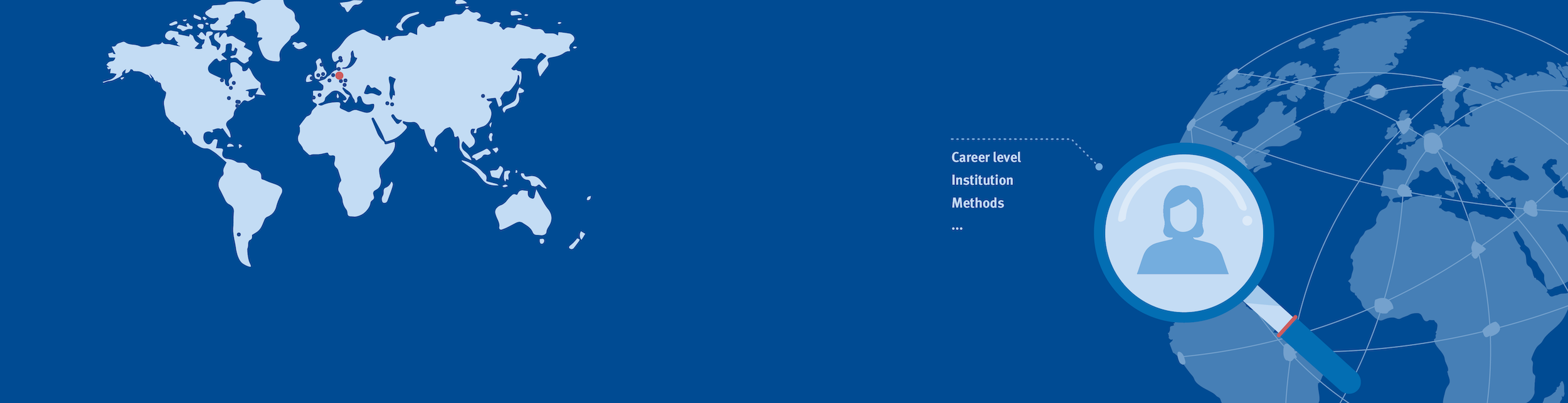
Search and find our scientists now!

Search and find scientists now!

Find a Scientist

Find a Scientist

more
Schräge Slider StartseiteSchräge Slider Startseite

Bernstein Conference 2026

Bernstein Conference 2025

Bernstein Conference

Bernstein Conference

more

Welcome

The Bernstein Network Computational Neuroscience connects experimental and theoretical scientists. It comprises more than 200 research groups and 450 individual scientists from all over the world who combine experimental neuroscientific approaches with theoretical models and computer simulations.

The Bernstein Network was launched in 2004 through a major funding initiative of the German Federal Ministry of Education and Research (BMBF) which aimed at advancing the transfer of theoretical knowledge to clinical and technical applications. The network is named after the German physiologist and biophysicist Julius Bernstein (1839-1917).
News

Bochum, Germany May 4, 2026

Experienced or just remembered?

How, when, and where do we remember events we have truly experienced? Researchers in philosophy and neuroscience in Bochum are working together to answer this question.

Berlin, Germany May 20, 2026

How the brain detects relevance — and how AI learns from it

The human brain’s ability to filter relevant information from the vast amount of data it continuously receives is known as attention. Researchers at BIFOLD at the Technical University of Berlin, in close collaboration with scientists from the Kording Lab at the University of Pennsylvania, have developed a brain-inspired AI model of visual attention. What is particularly remarkable is that the model reproduces numerous well-established behavioral and perceptual phenomena from psychology and neurophysiology without these effects having been explicitly programmed into it. This not only advances our understanding of human visual perception but also provides a new perspective and framework for AI researchers. The joint study has now been published in the journal Nature Communications.

Berlin, Germany May 13, 2026

The shoal remembers: How signs of a collective memory shape a predator-prey arms race

Beneath the tropical trees of southern Mexico, enormous shoals of sulphur mollies blanket the water surface of toxic sulphur springs, where survival depends on collective defence against relentless attacks from predatory birds. The tiny fish survive attacks of birds through creating spectacular collective waves. But new research now shows that their avian predators are adapting too, changing where they attack to avoid triggering the fish’s powerful group defence. The fish, in turn, appear to fight back with a surprising form of collective “memory.” The study by the Cluster of Excellence “Science of Intelligence” (SCIoI) in collaboration with the Leibniz Institute of Freshwater Ecology and Inland Fisheries (IGB) was published today in the journal Proceedings of the Royal Society B.

Berlin, Germany May 4, 2026

Neuroscientist Dr. Yangfan Peng leads new Emmy Noether research group

How do neighboring neurons in the cerebral cortex communicate with one another during movement? This is the question that Dr. Yangfan Peng is now investigating in his Emmy Noether junior research group at Charité – Universitätsmedizin Berlin. His goal is to establish fundamental structure–function principles of neuronal networks in order to deepen our understanding of motor control. The German Research Foundation (DFG) is initially funding the project for three years with € 1.25 million and, following a successful interim evaluation, has indicated the possibility of an additional three-year funding period of approximately 945,000 €.

Events

Bernstein Conference

Abstract Submission

Satellite Workshops Program

Register Now

Calls

Emmy Noether Groups “Methods in Artificial Intelligence”

AI methods have become established as key tools across a wide range of research areas and are now increasingly an integral part of the processes of knowledge acquisition in science. Research in the field of AI methods is essential in this context and includes the development and further advancement of such methods as well as their analysis and evaluation. As it continues to pursue its strategic AI funding initiative, the Deutsche Forschungsgemeinschaft (DFG, German Research Foundation) therefore aims to provide targeted support for researchers in early career phases in this field. The objective of this call is to attract the next generation of highly qualified researchers in AI method development by offering early-career opportunities involving a high degree of independence. Successful applicants will have the opportunity to establish and lead an Emmy Noether Group for a period of up to six years, enabling them to refine their research profile, enhance their international visibility and become eligible for a professorship.

Deadline: 10.06.2026

Else Kröner Excellence Grants 2026

For decades now, advances in medical research in the USA have helped to find cures for diseases and save lives all around the world. Restrictions on scientific freedom and cuts to the funding for research areas deemed undesirable are increasingly impacting the work of some scientists living and researching in the USA, however. With the Else Kröner Excellence Grants, the Else Kröner-Fresenius-Stiftung (EKFS) aims to enable outstanding scientists (m/f/d) to successfully continue their medical research in Germany. Medical faculties and universities wishing to host a US-based scientist at their research facility in Germany can apply with the scientist to the EKFS for funding. In 2026, the foundation has once again earmarked a total of €10 million for this initiative.

Deadline: 15.06.2026

Forschungsstipendien für promovierte Nachwuchswissenschaftlerinnen und -wissenschaftler (Postdoc-Programm) – Kurzstipendien

Ziel des Programms ist es, hochqualifizierten Nachwuchsforscherinnen und -forschern die Durchführung eines selbstgewählten Forschungsvorhabens im Ausland und damit einen wichtigen Qualifizierungsschritt für die spätere Berufslaufbahn in Wissenschaft, Wirtschaft oder im Kulturbereich in Deutschland zu ermöglichen. Gefördert werden Forschungsaufenthalte (3-6 Monate) in allen Fachrichtungen an einem selbst gewählten Gastinstitut im Ausland. Innerhalb des Förderzeitraums sind Aufenthalte in mehreren Ländern oder in mehreren wissenschaftlichen Einrichtungen innerhalb eines Landes möglich.

Deadline: 15.06.2026