
Internationally renowned researcher Eleonora Russo joins University Medical Center Mainz as DFG Mercator Fellow
Italian scientist Prof. Dr. Eleonora Russo has joined the Department of Psychiatry and Psychotherapy at the University Medical Center Mainz (UM) as a DFG Mercator Fellow, effective July 1, 2026. Hosted by Prof. Dr. Wolfgang Kelsch, Professor of Systems Neuroscience and senior physician at the Department of Psychiatry and Psychotherapy, Russo brings her internationally recognized expertise in theoretical neuroscience from the prestigious BioRobotics Institute at the Scuola Superiore Sant'Anna in Pisa, Italy.
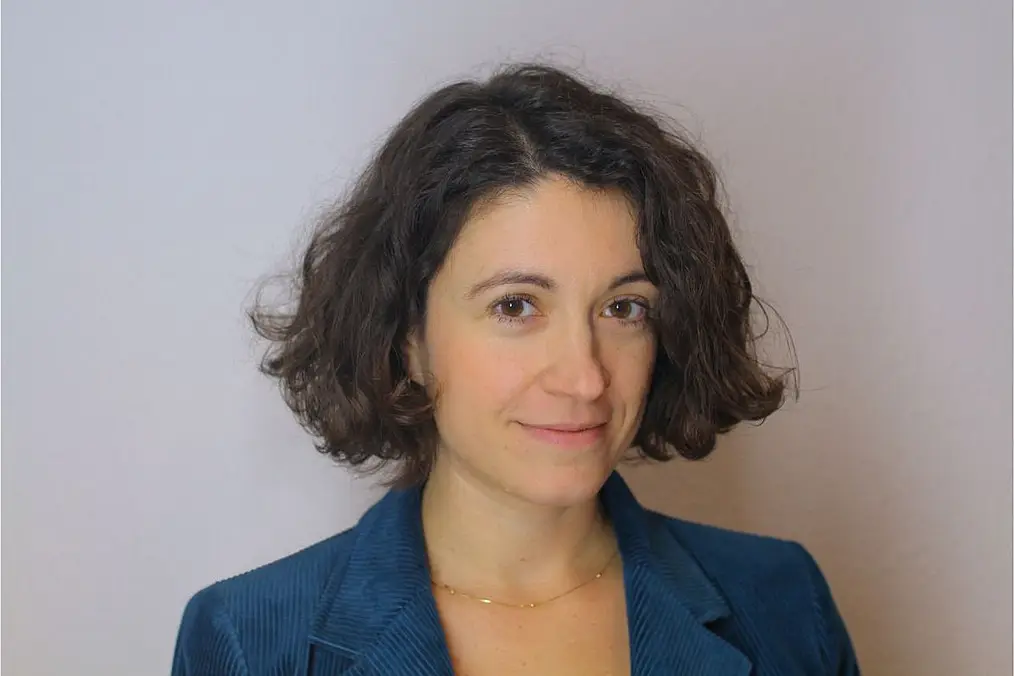
Prof. Dr. Eleonora Russo, Professor of Theoretical Neuroscience, will collaborate with the research group led by Prof. Dr. Wolfgang Kelsch as a DFG Mercator Fellow to study the mechanisms underlying mental disorders. Photo: Eleonora Russo
The Mercator Fellowship is embedded within a research project funded by the German Research Foundation (DFG) that uses artificial intelligence to investigate the development of mental disorders and the mechanisms underlying resilience. In the long term, the findings are expected to contribute to the development of more effective psychological and neuromodulatory therapies for psychiatric disorders.
The DFG-funded project, “Neuronal Mechanisms of Context-Dependent Learning,” aims to uncover how brain networks learn to interpret the same sensory input differently depending on context. The underlying neural processes remain poorly understood, despite their importance for adaptive behavior. Clinically, disruptions in these learning mechanisms can contribute to anxiety, stress, and avoidance behaviors by causing everyday experiences to be interpreted in maladaptive ways.
To better understand these neurocognitive processes, the research team employs machine learning methods. “We are developing new models at the interface between artificial intelligence and brain networks,” explains Prof. Russo. To achieve this, the researchers combine experimental data with mathematical models inspired by the architecture of biological neural networks in the human brain.
“With Professor Russo, we are welcoming an internationally recognized expert in this highly relevant and forward-looking field of research,” says Prof. Dr. Wolfgang Kelsch, senior physician at the Department of Psychiatry and Psychotherapy at University Medical Center Mainz. “I am very much looking forward to further strengthening the multidisciplinary collaboration we have built over many years.”
Ultimately, the joint research project aims to support the development of more targeted psychological and neuromodulatory therapies, thereby improving the long-term treatment of mental disorders.
Beginning July 1, 2026, Prof. Dr. Eleonora Russo, Professor of Theoretical Neuroscience at the renowned BioRobotics Institute of the Scuola Superiore Sant’Anna in Pisa, Italy, will serve as a Mercator Fellow of the German Research Foundation (DFG) at University Medical Center Mainz. Over the next three years, the fellowship program is designed to foster particularly intensive and long-term scientific exchange with leading international researchers.
About Prof. Dr. Eleonora Russo
Eleonora Russo studied physics at the University of Pisa, Italy, and earned her Ph.D. in Neuroscience from the International School for Advanced Studies (SISSA) in Trieste. Her doctoral research focused on modeling the dynamics of free associations in the cerebral cortex.
Following her Ph.D., she completed postdoctoral research at the Central Institute of Mental Health (ZI) in Mannheim, Germany. As an independent research fellow funded by the Chica and Heinz Schaller Foundation, she developed machine learning techniques for analyzing neural signals with the goal of characterizing information coding in the brain.
In 2021, she established and led the junior research group “Complex Systems in Psychiatry” at the Department of Psychiatry and Psychotherapy at University Medical Center Mainz. In 2023, she was appointed Assistant Professor at the BioRobotics Institute of the Scuola Superiore Sant’Anna in Pisa, where she currently leads the Brain Dynamics Laboratory.
About the DFG Mercator Fellowship
The DFG Mercator Fellowship is a highly selective distinction awarded by the German Research Foundation (DFG). Mercator Fellows are chosen specifically for their outstanding international expertise. The program enables intensive and sustained scientific exchange with leading researchers from abroad by supporting extended research stays at German host institutions. Beyond the funded stay, fellows remain closely connected to the research project, fostering long-term collaboration. The fellowship highlights the international visibility and competitiveness of research conducted at the host institution.