Two of the prestigious ERC Synergy Grants Awarded to Charité
Outstanding acknowledgement of brain research at Charité – Universitätsmedizin Berlin: the ERC Synergy Grants bestowed by the European Research Council are reserved for research projects that are so complex and sophisticated that they can only succeed thanks to the collaboration of several outstanding scientists. Charité has now secured two such projects: PTSDynamicTwin, coordinated by Prof. Petra Ritter, a neuroscientist at the Berlin Institute of Health at Charité (BIH) and a member of the Bernstein Network, in collaboration with two international partners; and IMMUNE-MEMORY, which Charité psychologist Prof. Claudia Buß will conduct together with three other international researchers. Each project will receive initial funding to the tune of approximately 10 million euros over the next six years.
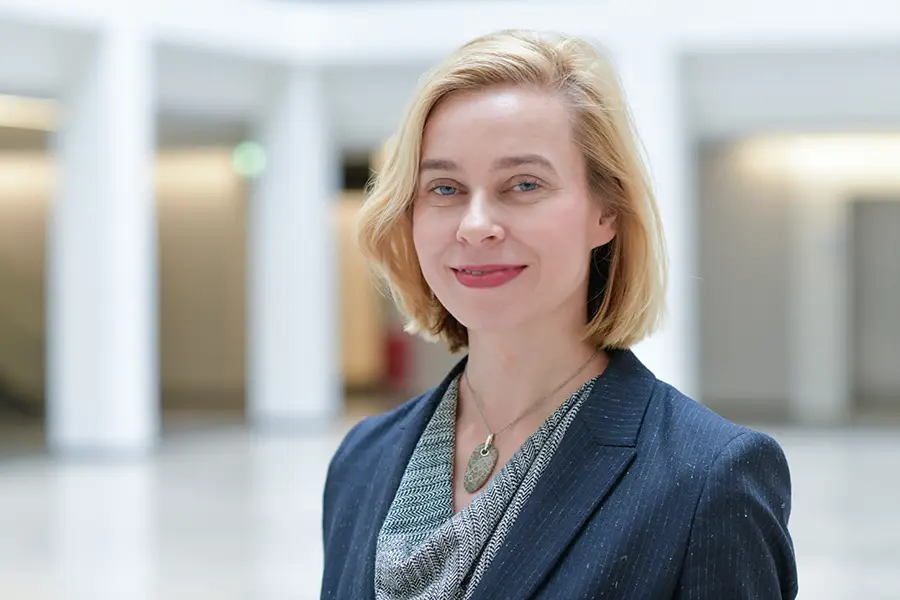
Prof. Petra Ritter © Charité | Wiebke Peitz
As a co-founder of The Virtual Brain digital research platform, Petra Ritter has been working for many years to simulate complex brain networks on a computer as realistically as possible in order to predict individual disease progression based on these simulations. Virtual brain models are also involved in the current project.
The digital brain twin reveals when the mind and soul lose their rhythm
Why do some people develop chronic post-traumatic stress disorder (PTSD) after traumatic experiences such as accidents, natural disasters, or war, while others are capable of regaining their emotional balance? The PTSDynamicTwin project, coordinated by Prof. Petra Ritter at Charité and BIH, aims to investigate precisely this question. Also on board to implement the project are trauma researcher Prof. Thalma Hendler from Tel Aviv University and Japanese neuroscientist and physicist Dr. Mitsuo Kawato.
“The ability to respond flexibly to change determines whether a person remains resilient or becomes ill,” as Petra Ritter states. In order to discover which processes determine whether adaptation to severe changes succeeds or fails, the researchers not merely view the brain as a static snapshot, but in terms of its natural, dynamic fluctuations. In order to achieve this, they draw on the open-source platform The Virtual Brain, which allows them to simulate individual brain models on a computer. Brain scans, wearable everyday sensors, and behavioral tests are deployed to create a “digital twin” of the brain. This tool enables the team to map the personal brain dynamics of affected individuals, test therapeutic approaches, and determine the optimal timing for treatment.
Within the context of the project, the researchers are also addressing ethical issues and the requirements for safe and secure data use. The ultimate goal is predictive, dynamic precision medicine. “We want to be able to offer treatment at precisely the right moment – treatment that restores patients’ flexibility and quality of life,” emphasizes Petra Ritter. For patients, this could replace rigid treatment regimens and tailor treatment precisely to their individual brain dynamics and life circumstances as part of personalized care.