Bernstein Network Computational Neuroscience
  • Home
  • Network
    • The Bernstein Network
    • Bernstein Centers
      • Berlin
      • Freiburg
      • Göttingen
      • Munich
      • Tübingen
      • Heidelberg-Mannheim
    • Bernstein Nodes
      • Bernstein Node Aachen-Jülich
      • Bernstein Node Bochum
      • Bernstein Node Bonn-Cologne
      • Bernstein Node Chemnitz
      • Bernstein Node Hamburg
      • Bernstein Node Marburg
      • Bernstein Node Paris
      • Bernstein Node Rhine-Main Region
      • Bernstein Node Taiwan
    • Bernstein Facilities
      • High Performance Simulation and Data Analysis
      • Research Data Management
      • Bernstein Coordination Site (BCOS)
    • Awards and Initiatives
      • Valentin Braitenberg Award
      • Brains for Brains Young Researcher Award
      • Promoting Young Scientists
    • Committees
    • Network Ethics and Values
    • Statutes
    • Membership
    • History
    • Donation
    • Contact
  • Newsroom
    • Newsroom
    • News
    • Events
    • Calls
    • Media Coverage
    • Network Publications
    • Bernstein Bulletin
    • Press
  • Teaching and Research
    • Teaching and Research
    • Meet the Scientist
    • Find a Scientist
    • Degree Programs
      • Master Programs
      • PhD Programs
    • Study and Training
      • Bernstein Student Workshop Series
      • Online Learning
      • Advanced Courses
      • Internships and Master theses
      • Podcasts
  • Career
    • Career
    • Job Pool
    • Calls
    • Internships and Master theses
  • Bernstein Conference
    • Bernstein Conference
    • Abstract Submission
    • Registration
    • Exhibition
    • Program
      • Schedule
      • Satellite Workshops
      • Conference Dinner
    • Early Career Scientists
      • Travel Grants
      • PhD Symposium
      • Postdoc Meeting
    • General Information
      • Important Dates & FAQ
      • Plan Your Visit
      • Press
      • Code of Conduct
      • PR Media Policy
      • Data Policy
    • Past and future Bernstein Conferences
  • DE
  • EN
  • Click to open the search input field Click to open the search input field Search
  • Menu Menu
You are here: Home1 / Newsroom2 / News3 / Two of the prestigious ERC Synergy Grants Awarded to Charité
Berlin, Germany – November 12, 2026

Two of the prestigious ERC Synergy Grants Awarded to Charité

Outstanding acknowledgement of brain research at Charité – Universitätsmedizin Berlin: the ERC Synergy Grants bestowed by the European Research Council are reserved for research projects that are so complex and sophisticated that they can only succeed thanks to the collaboration of several outstanding scientists. Charité has now secured two such projects: PTSDynamicTwin, coordinated by Prof. Petra Ritter, a neuroscientist at the Berlin Institute of Health at Charité (BIH) and a member of the Bernstein Network, in collaboration with two international partners; and IMMUNE-MEMORY, which Charité psychologist Prof. Claudia Buß will conduct together with three other international researchers. Each project will receive initial funding to the tune of approximately 10 million euros over the next six years.
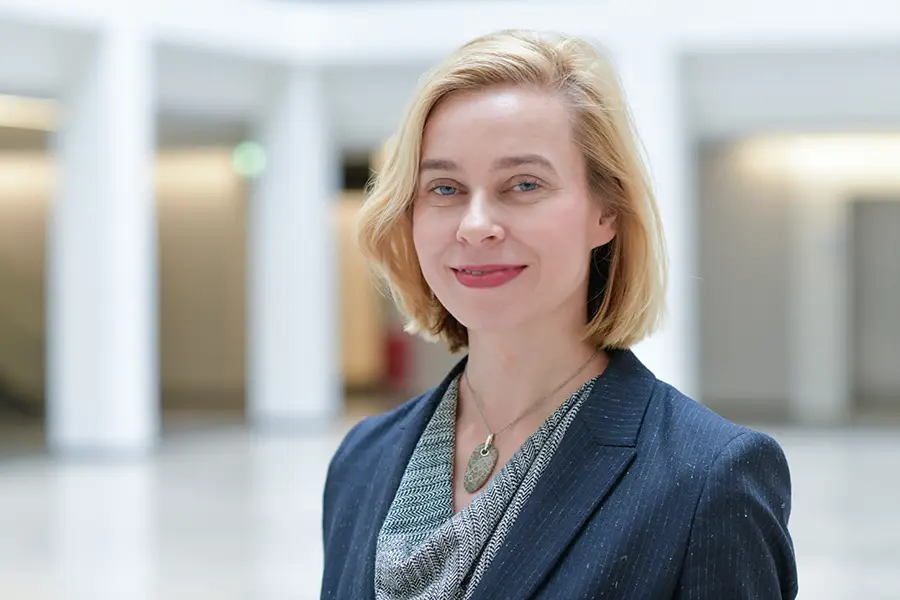
Prof. Petra Ritter © Charité | Wiebke Peitz

As a co-founder of The Virtual Brain digital research platform, Petra Ritter has been working for many years to simulate complex brain networks on a computer as realistically as possible in order to predict individual disease progression based on these simulations. Virtual brain models are also involved in the current project.

The digital brain twin reveals when the mind and soul lose their rhythm

Why do some people develop chronic post-traumatic stress disorder (PTSD) after traumatic experiences such as accidents, natural disasters, or war, while others are capable of regaining their emotional balance? The PTSDynamicTwin project, coordinated by Prof. Petra Ritter at Charité and BIH, aims to investigate precisely this question. Also on board to implement the project are trauma researcher Prof. Thalma Hendler from Tel Aviv University and Japanese neuroscientist and physicist Dr. Mitsuo Kawato.

“The ability to respond flexibly to change determines whether a person remains resilient or becomes ill,” as Petra Ritter states. In order to discover which processes determine whether adaptation to severe changes succeeds or fails, the researchers not merely view the brain as a static snapshot, but in terms of its natural, dynamic fluctuations. In order to achieve this, they draw on the open-source platform The Virtual Brain, which allows them to simulate individual brain models on a computer. Brain scans, wearable everyday sensors, and behavioral tests are deployed to create a “digital twin” of the brain. This tool enables the team to map the personal brain dynamics of affected individuals, test therapeutic approaches, and determine the optimal timing for treatment.

Within the context of the project, the researchers are also addressing ethical issues and the requirements for safe and secure data use. The ultimate goal is predictive, dynamic precision medicine. “We want to be able to offer treatment at precisely the right moment – treatment that restores patients’ flexibility and quality of life,” emphasizes Petra Ritter. For patients, this could replace rigid treatment regimens and tailor treatment precisely to their individual brain dynamics and life circumstances as part of personalized care.
Further links

Original press release

> more

Brain Simulation Research Group

> more

Interview with Prof. Petra Ritter (in German)

> more

Two of the prestigious ERC Synergy Grants Awarded to Charité

16. November 2026/in /by Elena Reiriz Martinez

Kontakt Aktuelles

Contact

Markus Heggen

Press contact
Head of Business Division Media & Political Communication | Corporate Spokesperson
Charité – Universitätsmedizin Berlin

+49 (0) 30 450 570 400
presse@charite.de

Bernstein Netzwerk Computational Neuroscience Logo

Become a member
Statutes
Donation
Subscribe to Newsletter


Follow us on

LinkedIn
Bluesky
Vimeo
Mastodon
© 2026 Bernstein Network Computational Neuroscience
  • Contact
  • Imprint
  • Privacy Policy
Scroll to top Scroll to top Scroll to top
Cookie-Zustimmung verwalten
We use cookies to optimize our website and our service.
Functional Always active
Der Zugriff oder die technische Speicherung ist unbedingt für den rechtmäßigen Zweck erforderlich, um die Nutzung eines bestimmten Dienstes zu ermöglichen, der vom Abonnenten oder Nutzer ausdrücklich angefordert wurde, oder für den alleinigen Zweck der Übertragung einer Nachricht über ein elektronisches Kommunikationsnetz.
Vorlieben
Die technische Speicherung oder der Zugriff ist für den rechtmäßigen Zweck der Speicherung von Voreinstellungen erforderlich, die nicht vom Abonnenten oder Nutzer beantragt wurden.
Statistics
Die technische Speicherung oder der Zugriff, der ausschließlich zu statistischen Zwecken erfolgt. Die technische Speicherung oder der Zugriff, der ausschließlich zu anonymen statistischen Zwecken verwendet wird. Ohne eine Aufforderung, die freiwillige Zustimmung Ihres Internetdienstanbieters oder zusätzliche Aufzeichnungen von Dritten können die zu diesem Zweck gespeicherten oder abgerufenen Informationen allein in der Regel nicht zu Ihrer Identifizierung verwendet werden.
Marketing
Die technische Speicherung oder der Zugriff ist erforderlich, um Nutzerprofile zu erstellen, um Werbung zu versenden oder um den Nutzer auf einer Website oder über mehrere Websites hinweg zu ähnlichen Marketingzwecken zu verfolgen.
  • Manage options
  • Manage services
  • Manage {vendor_count} vendors
  • Read more about these purposes
Einstellungen
  • {title}
  • {title}
  • {title}