Early-career researchers from University Medical Center and University of Göttingen receive prestigious European research grants
The European Research Council (ERC) is supporting scientists Prof. Dr. Elisa Oberbeckmann, Dr. Sophie de Vries and Dr. Tristan Manfred Stöber with ERC Starting Grants of €1.5 million each for a period of five years.
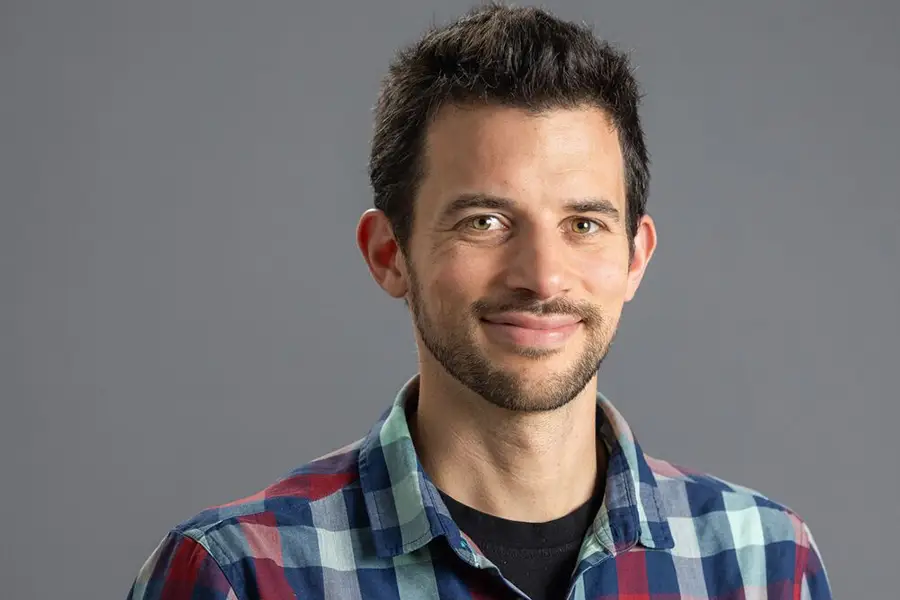
Dr. Tristan Manfred Stöber, Göttingen University (Foto: eivind senneset/ayf)
Three researchers at the Göttingen Campus have each received an ERC Starting Grant from the European Research Council (ERC). Prof. Elisa Oberbeckmann of University Medical Center Göttingen is being funded for her project investigating the mechanisms underlying nucleosome positioning, while evolutionary biologist Dr Sophie de Vries of the University of Göttingen will study plant immune responses in perpetual symbioses. Among the three awardees is Dr Tristan Stöber, a computational neuroscientist at the University of Göttingen and a member of the Bernstein Network. His project, “World Models in Brains and Machines: From Normative Hippocampus Models to Robust Planning in Artificial Intelligence and Back” (WoM-BaM), explores world models in brains and artificial intelligence. The three projects will run for five years and are each funded with around €1.5 million.
How does the brain understand the world? Can this knowledge improve AI systems?
Dr Tristan Stöber, Research Fellow at Göttingen University’s Campus Institute Data Science (CIDAS), has been awarded funding for the WoM-BaM project. This research will derive insights from neuroscience – in particular how the brain builds and uses its internal model of the world – to help build better AI systems. This in turn can deepen our understanding of how the brain works.
Evaluating future scenarios by mentally travelling in time is a hallmark of intelligence and requires an internal representation of the world. To build such a model, brains infer structural knowledge from interacting with the environment. AI systems attempt to do the same but have a weakness in “long-horizon navigation tasks” – meaning solving complex problems across large, unfamiliar, or changing environments over extended periods. This weakness may stem from a fundamental flaw in AI’s world model: in contrast to the brain, these algorithms may fail to develop well-structured representations.
To address this, Stöber’s project investigates world model learning in both brains and machines using a cross-disciplinary approach that explains the fundamental weaknesses of AI systems to overcome their limitations with newly developed techniques inspired by how the human brain works. Stöber and his team will first create a new, simplified, and scalable virtual test environment called the MiniGrid Memory maze to systematically probe the limits of current AI models. Second, the team will combine techniques from psychology, to create a system capable of both flexible processing in time and structured reasoning. This will enable them to validate artificial world models against a unique dataset of brain activity recorded from mice navigating different environments. “This method establishes a virtuous circle: insights from neuroscience will improve AI, which in turn will serve as a powerful computational framework to deepen our understanding of how the brain builds its model of the world,” explains Stöber. “In addition, improving world model learning in artificial neural networks should lead to intelligent systems that surpass current technology in reliability, speed and efficiency. This will reduce data requirements and energy consumption.”