
What flies, mice, and humans have in common when it comes to movement
A study published in PNAS reveals a common principle underlying joint movement, and shows that ageing weakens the propulsive strength in all species studied. New open-source software enables movement patterns to be compared across species.
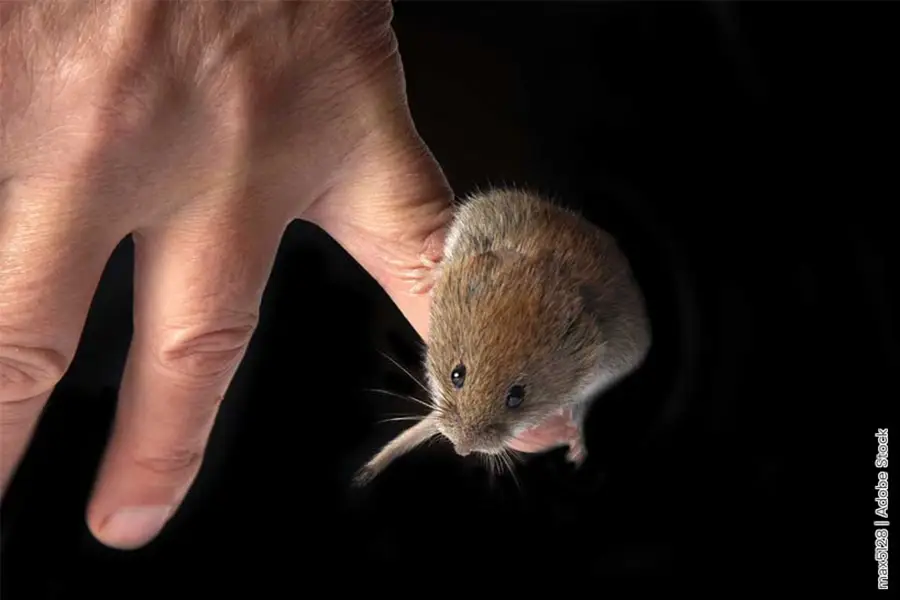
Foto: max5128 | Adobe Stock
Bernstein member involved: Graziana Gatto
Flies, mice and humans move in different ways due to very different physiques, but their movements follow a common pattern. Joints farther from the centre of the body move faster than those closer to the body. This was demonstrated in a study conducted by a research team from the University of Cologne and the Forschungszentrum Jülich led by Professor Dr Silvia Daun and Professor Dr Graziana Gatto, which was published in the Proceedings of the National Academy of Sciences (PNAS) journal under the title “Cross-species identification of conserved and divergent locomotor kinematic strategies using AutoGaitA”. For the study, the researchers developed the open-source software AutoGaitA, which makes it possible to analyse the movement patterns of different animal species under various experimental conditions using standardized methods.
The researchers investigated walking in fruit flies, mice and humans using movement data from various joints. Although the three species use different mechanisms to generate forward propulsion of their legs, all exhibited a similar pattern of joint velocities. The velocities are greater at the joints furthest from the centre of the body than at those closest to it. This so-called distal-to-proximal velocity gradient remained unchanged even under altered conditions. The results thus point to a shared fundamental principle of motor control, even between species that are evolutionarily distant from one another.
Another key focus of the study was the question of how ageing affects movement. This was evident in a loss of propulsive strength in flies, mice and humans. However, due to their anatomical differences, the specific changes vary between species. In older humans, propulsion via the ankle joint in particular was reduced, whilst in mice, changes occurred especially in the knee and ankle joints. Changes in the coordinated flexion of the legs were observed in fruit flies. Despite these differences, the fundamental ratio of the joint velocities remained the same.
“Our findings show that, despite the clear biomechanical differences between species, walking is based on shared principles. Current methodological alternatives are often built from scratch for a single species or experiment; AutoGaitA instead lets us highlight these shared principles while also resolving species-specific differences in detail,” says lead author Dr Mahan Hosseini from the Forschungszentrum Jülich.
“AutoGaitA thus provides a standardized, quantitative framework for comparing movement patterns across different animal species, experimental conditions and behaviours,” says Professor Dr Silvia Daun from the Institute of Zoology at the University of Cologne. The open-source software can be used not only to study walking, but also, in principle, for other rhythmic movements such as swimming, flying or jumping. In the future, such comparative analyses could help us better understand which changes in motor function are attributable to common biological mechanisms and which are species-specific. Researchers therefore see great potential in the framework for studying ageing processes and neurological disorders, and as a path to developing and evaluating rehabilitation approaches.