
Bernstein Network News. Find the latest news from our researchers regarding current research results, new research projects and initiatives as well as awards and prizes.
News
News
Göttingen, Germany –
August 5, 2026
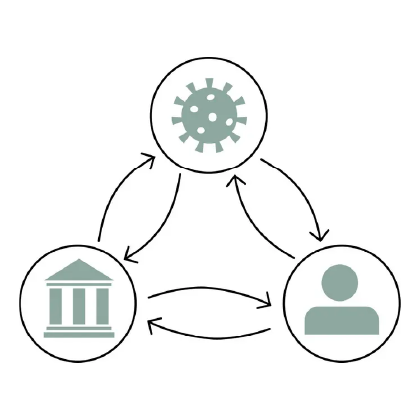
Beyond COVID-19: Fundamental principles that shape pandemics
Pandemics follow common fundamental principles despite their differences. The course of pandemics arises from the interplay of biological, mathematical, and social mechanisms. Understanding these principles can improve preparedness and response to future pandemics.
Bonn, Germany –
July 17, 2026
Hunting for new angles: New Henriette Herz Scouts at the University of Bonn
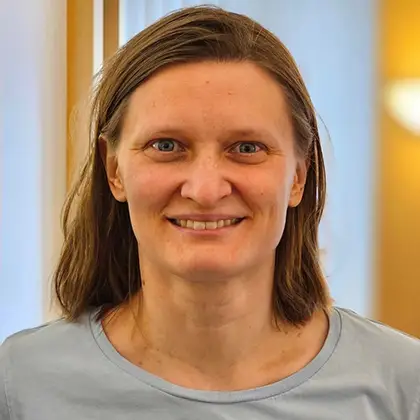
New research questions often arise where different methods, mindsets and subject-specific cultures meet, and it is these kinds of encounter that Bernstein member Professor Tatjana Tchumatchenko and her Bonn colleague Professor Elvira Mass want to make happen in a targeted way in future. The two researchers have been picked as Henriette Herz Scouts by the Alexander von Humboldt Foundation.
Munich, Germany –
July 6, 2026
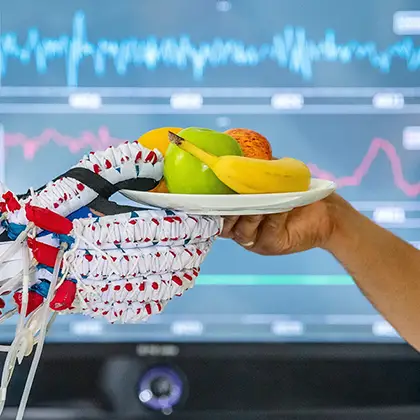
Special glove helps people with paralyzed hands grasp objects
The Technical University of Munich (TUM) has developed a soft, pneumatic glove that restores the ability of people with paralyzed hands to grasp objects. To achieve this, researchers at the TUM Chair of Cognitive Systems use electrical signals from the forearm muscles to reliably predict when a person intends to grasp an object. The invention could one day help people whose hands have been paralyzed as a result of accidents or neurological disorders.

Bonn, Germany –
July 2, 2026
University of Bonn secures three Proof of Concept Grants
Three University of Bonn researchers have been awarded a Proof of Concept Grant by the European Research Council (ERC). Neuroscientist Professor Dominik Bach, chemist Assistant Professor Ala Bunescu and radiologist Professor Philipp Vollmuth (from the University Hospital Bonn) are each receiving €150,000 over a period of 18 months. This program helps researchers to take findings from their work and turn them into commercial products or services.

Mainz, Germany –
July 2, 2026
Internationally renowned researcher Eleonora Russo joins University Medical Center Mainz as DFG Mercator Fellow
Italian scientist Prof. Dr. Eleonora Russo has joined the Department of Psychiatry and Psychotherapy at the University Medical Center Mainz (UM) as a DFG Mercator Fellow, effective July 1, 2026. Hosted by Prof. Dr. Wolfgang Kelsch, Professor of Systems Neuroscience and senior physician at the Department of Psychiatry and Psychotherapy, Russo brings her internationally recognized expertise in theoretical neuroscience from the prestigious BioRobotics Institute at the Scuola Superiore Sant'Anna in Pisa, Italy.

Constance, Germany –
June 25, 2026
Surroundings influence developing biology of the eye
In a virtual reality study involving zebrafish, researchers from the University of Konstanz and King’s College London have discovered that the development of the eye is influenced by what the fish see during the early stages of life – and this, in turn, alters their behaviour.

Freiburg, Germany –
June 24, 2026
Xiao-Jing Wang receives the 2026 Valentin Braitenberg Award for Computational Neuroscience
Xiao-Jing Wang receives this year’s Valentin Braitenberg Award for his “enormous contributions across many subfields, from biophysics to computational psychiatry” (the award committee). The award ceremony will take place during the Bernstein Conference on September 29, 2026, in Frankfurt am Main.
Hamburg, Germany –
June 23, 2026
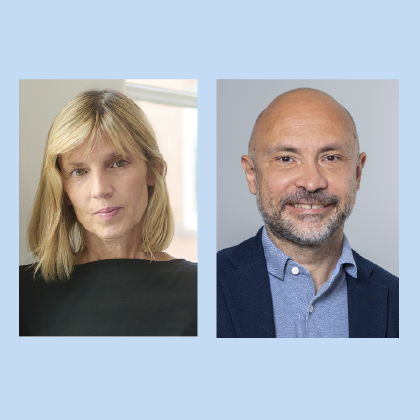
UKE neuroscience projects awarded ERC Advanced Grants
Two researchers at the University Medical Center Hamburg-Eppendorf (UKE) have once again been awarded prestigious ERC Advanced Grants by the European Research Council (ERC). The funded projects focus on brain research and will receive more than €2.4 million for UKE over the next five years. With these latest awards, UKE has now secured a total of 40 ERC Grants.
Munich, Germany –
June 22, 2026
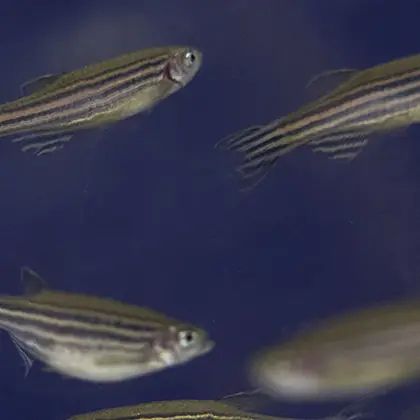
Convergent evolution of mechanisms for spatial navigation
Researchers from the Bernstein Center for Computational Neuroscience Munich, LMU, and Cornell University reveal that zebrafish and fruit flies share the same internal compass mechanism, despite being separated by more than 550 million years of evolution.
Göttingen, Germany –
June 18, 2026
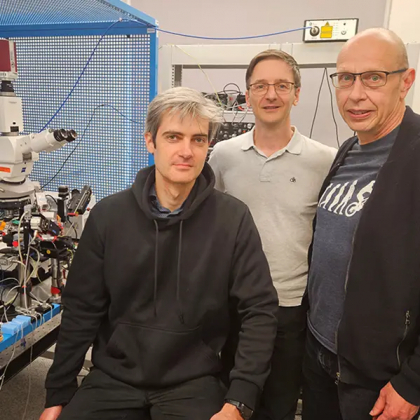
Specialists at work – Nerve cells adapt their structure and function to their task
An international research team led jointly by the University Medical Center Göttingen (UMG), the University of Göttingen, and the University of Western Ontario in London, Canada, has shown that nerve cells in the brain specialize in different tasks when processing visual information. The research focused on working memory — a complex network of different brain regions that stores and links information. A disruption in this information processing can lead to neurological and neuropsychiatric disorders. The study results could help identify new treatment approaches for these disorders and have been published in the journal Nature Communications.
Follow us on