
Konferenzen, Symposien, Workshops, Kurse. Unsere Mitglieder sind aktiv in vielen Veranstaltungen eingebunden. Hier finden Sie die aktuelle Liste der anstehenden Events, die für Forschende der Computational Neuroscience von Interesse sind.

Veranstaltungen
Veranstaltungen

The 18th International Conference on the Simulation of Adaptive Behavior (SAB 2026)
19.10. – 22.10.2026
Berlin, Germany
Conference
The objective of this interdisciplinary conference is to bring together researchers in computer science, artificial intelligence, artificial life, control, robotics, neurosciences, ethology, evolutionary biology and related fields in order to further our understanding of the behaviors and underlying mechanisms that allow natural and artificial animals to adapt and survive in uncertain environments. The conference will focus on models of adaptive behavior and its underlying mechanisms, and on experiments grounded on well-defined models including robot, computer simulation and mathematical models designed to help characterize and compare various principles or architectures underlying adaptive behavior in real animals and in synthetic agents, the “animats”. Selected papers will be invited to a special issue in the journal Adaptive Behavior and will be published with Springer Nature.
Beteiligte Bernstein Mitglieder:
Pawel RomanczukGregor Schöner
Jochen Triesch
Florentin Wörgötter
Berlin Brains: How Context Modulates Memory – in Flies and Humans
03.11. – 03.11.2026
Berlin, Germany
Talk
Our experiences shape who we are. But according to what rules does the brain store experiences in long-term memory? And how does the physiological context (e.g., nutrition or stress) influence the processing of information? Lisa Scheunemann and Sevval Demirci are investigating the extent to which serotonin-mediated neuromodulation might establish an interaction between physiological state and memory systems. Together, they will present how they are using a combination of genetic tools, behavioral studies, and imaging to analyze the molecular and cellular learning mechanisms in the fruit fly Drosophila melanogaster-and what the results mean for us humans. The event is accompanied by an exhibition: microscopic images reveal the beauty of neurons and glial cells.
Beteiligte Bernstein Mitglieder:
Lisa Scheunemann
Berlin Brains: Zwischen den Blicken – Die verborgene Dynamik des Sehens
05.11. – 05.11.2026
Berlin, Germany
Talk
Sehen ist ein turbulenter Prozess. Mit jeder Blickbewegung gerät unsere Wahrnehmung in Bewegung: Aufmerksamkeit springt voraus, visuelle Eindrücke werden verstärkt, unterdrückt, und neu zusammengesetzt. Dass wir die Welt als stabil erleben, ist eine der großen Leistungen des Gehirns. Im immersiven Raum der Planetariumskuppel machen Professor Martin Rolfs und Dr. Nina Hanning diese verborgenen Dynamiken des Sehens erstmals in völlig neuer Dimension erfahrbar. Sie laden das Publikum zu einem immersiven Live-Experiment ein, bei dem aktuelle Forschung nicht nur gezeigt, sondern gemeinsam erlebt wird.
Beteiligte Bernstein Mitglieder:
Martin Rolfs
SNUFA 2026: Spiking Neural networks as Universal Function Approximators
04.11. – 05.11.2026
Online
Workshop
This online workshop brings together researchers in the fields of computational neuroscience, machine learning, and neuromorphic engineering to present their work and discuss ways of translating these findings into a better understanding of neural circuits. Topics include artificial and biologically plausible learning algorithms and the dissection of trained spiking circuits toward understanding neural processing. We have a manageable number of talks with ample time for discussions.
Beteiligte Bernstein Mitglieder:
Sacha van Albada (organizer)Dan Goodman (organizer)
Friedemann Zenke (organizer)
Mihai Petrovici
Susanne Schreiber
NeuroAI 7th Annual Conference
11.11. – 11.11.2026
London, UK
Conference
The 7th annual UCL NeuroAI Conference will feature leading speakers at the cutting edge of machine learning and neuroscience. The UCL NeuroAI initiative aims to be a central hub where researchers working in neuroscience, AI, machine learning, and related fields can interact and stay updated on the latest advancements in these intersecting areas. Our annual conference is an important opportunity for these communities to gather, make new connections, and benefit from insights in one another’s fields.
Beteiligte Bernstein Mitglieder:
Agostina Palmigiano
Neuroscience 2026
14.11. – 18.11.2026
Washington, D.C., USA
Conference
Each year, scientists from around the world congregate to discover new ideas, share their research, and experience the best the field has to offer. Attend so you can: present research, network with scientists, attend session and events, and browse the exhibit hall. Join the nearly half a million neuroscientists from around the world who have propelled their careers by presenting an abstract at an SfN annual meeting — the premier global neuroscience event.
The Bernstein Network will have an information booth at this event!

NeuralNet 2026
25.11. – 27.11.2026
Paris, France
Meeting
NeuralNet is the annual scientific meeting of the GDR NeuralNet (a research network supported by the Centre National de la Recherche Scientifique), bringing together researchers, engineers, and specialists in neural data acquisition, analysis, interpretation, and modeling. The meeting fosters interdisciplinary collaboration across systems neuroscience, computational modeling, NeuroAI and data science communities.
Beteiligte Bernstein Mitglieder:
Alex Cayco GajicJoao Barbosa
Katharina Wilmes
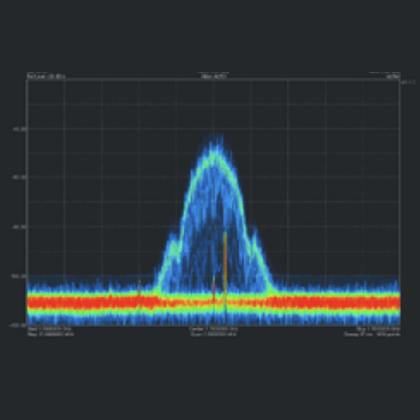
Course: Spectral analysis of time series in neuroscience – Fundamental methods
27.11. – 27.11.2026
Freiburg, Germany
Course
The 1-day course addresses fundamental aspects of spectral analysis without diving much into theory, just from a practical point of view. The aim is to provide a fundamental understanding of the different techniques out there to avoid mistakes, artefacts and to be able to choose the best technique for the own data. The course is planned like an interactive workshop, where we discuss analysis techniques and clarify open questions and possibly fill gaps of methodology understanding.
Beteiligte Bernstein Mitglieder:
Axel Hutt
Living Networks Symposium 2026
30.11. – 02.12.2026
Göttingen, Germany
Symposium
An international symposium bringing together experts across physics, data science, neuroscience, law, and social sciences to explore how living networks self-organize, maintain robustness, and respond to manipulation.
Beteiligte Bernstein Mitglieder:
Viola Priesemann (organizer)
Patagonian School of Science: Dynamics of Large-Scale Neural Systems
08.12. – 19.12.2026
Brazo Huemul, Lake Nahuel Huapi, Argentina
Winter school
The Patagonian School of Science brings together young scientists with faculty working at the center of systems neuroscience to discuss in depth how whole populations of neurons give rise to behavior. The bet is twofold: promoting genuine scientific exchange involving scientists from around the world, and enhancing research capacity in Argentina and across the region. The format is designed to create space for conversation, exchange, and idea-generation, surrounded by a unique landscape with little connection to outside networks. No wifi. Each student also gets dedicated one-on-one time with faculty.
Beteiligte Bernstein Mitglieder:
Susanne SchreiberSoledad Gonzalo Cogno
KI für die Wissenschaften: Auf dem Weg zum Verständnis
14.01. – 14.01.2027
Hamburg, Germany
Vortrag
In den letzten Jahren spielen Methoden des maschinellen Lernens (ML) und der künstlichen Intelligenz (KI) in der Wissenschaft und in der Industrie eine immer wichtigere Rolle. Insbesondere das Aufkommen großer und / oder komplexer Datensätze hat neue technologische Herausforderungen und Möglichkeiten mit sich gebracht. In diesem Vortrag wird auf das Thema „ML-Anwendungen in den Wissenschaften“ eingegangen, insbesondere in der Medizin und, sofern es die Zeit erlaubt, auch in der Chemie. Zudem werden Möglichkeiten erörtert, wie Informationen aus Machine-Learning-Modellen gewonnen werden können, um unser Verständnis nichtlinearer ML-Modelle zu vertiefen. Abschließend geht es kurz um Perspektiven und Grenzen der Anwendungen.
Beteiligte Bernstein Mitglieder:
Klaus-Robert Müller
Ringvorlesung „Wege zur Erforschung des Gehirns“
26.10. – 08.02.2027
Freiburg, Germany and online
Ringvorlesung
Das Bernstein Center Freiburg und die Fakultät für Biologie laden erneut zu spannenden Fragen, kreativen Ansätzen und praxisbezogenen Methoden rund um das Thema Neurowissenschaften ein. Herausragende Neurowissenschaftlerinnen und -wissenschaftler aus ganz Deutschland werden aus Sicht ihrer Disziplin anschaulich und verständlich über ihre Forschung berichten. Angesprochen wird ein Publikum mit Interesse an den aktuellen Themen der Hirnforschung. Nach einem etwa 40-minütigen Vortrag gibt es Gelegenheit zur Diskussion. Der Eintritt ist frei.
Die verborgenen Potenziale neurodivergenter Menschen
11.02. – 11.02.2027
Hamburg, Germany
Vortrag
Der Vortrag stellt eine These zur Diskussion: Je intelligenter künstliche Intelligenz wird, desto unverzichtbarer werden neurodivergente Menschen. Während KI statistische Regelmäßigkeiten optimiert und den Durchschnitt reproduziert, verkörpert Neurodiversität die Vielfalt menschlicher Kognition. Neurodivergente Menschen, deren Aufmerksamkeit von der Norm abweicht, könnten zum entscheidenden Innovationsfaktor einer von KI geprägten Zukunft werden.
Beteiligte Bernstein Mitglieder:
Claus C. Hilgetag (Moderation)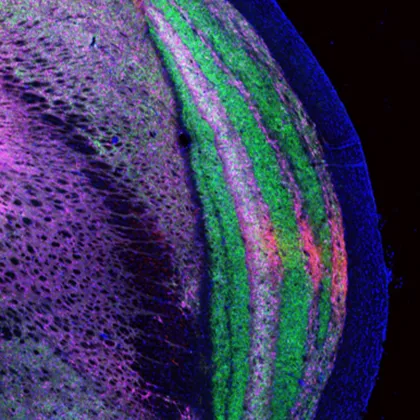
Subcortical Sensory Circuits: visual, auditory, somatosensory, and beyond
09.02. – 12.02.2027
Trieste, Italy
Symposium
Subcortical circuits play a crucial role in perception and the execution of a wide variety of essential behaviours. The number of laboratories focusing on subcortical areas has increased steadily, establishing these regions as key model systems for understanding how defined circuits and computations integrate sensory signals with context and internal state to drive and modulate some of life’s core behaviours. In this meeting we aim to bring together leading scientists whose research interrogates subcortical circuits from these different viewpoints using a variety of approaches. The program is complemented by a session focusing on modelling-based perspectives and approaches to catalyse discussions between experimental and computational researchers on how established models from other circuits and systems can be adapted to subcortical structures.
Beteiligte Bernstein Mitglieder:
Viola Priesemann
Goettingen Emergent Minds: Winter School on Learning and Computation in Brains and Machines
15.02. – 06.03.2027
Göttingen, Germany
Winter school
This winter school brings together researchers from neuroscience, machine learning, information theory, and applied mathematics to study learning, computation, and representation in complex systems. Topics range from neural dynamics and synaptic plasticity to data-driven discovery of dynamical models, biologically inspired machine learning, information-theoretic approaches to causality, and experimental and data-analytic perspectives. The goal is to foster a shared understanding of how brains and machines learn, represent structure in the world, and give rise to coherent computation across scales.
Beteiligte Bernstein Mitglieder:
Viola Priesemann (organizer)Marcel Raabe (organizer)
Wulfram Gerstner
Anna Levina

The 6th workshop on Cognitive neuroscience of auditory and cross-modal perception
19.04. – 21.04.2027
Košice, Slovakia
Workshop
The workshop centers on how people perceive, attend to, and understand sounds—especially speech—in complex spatial, noisy, multimodal, and technologically mediated environments. It aims to connect basic auditory mechanisms with real-world listening applications, using innovative tools such as games, mobile measures, neuroimaging, modeling, virtual environments, and hearing technologies. It will include advanced research talks (and introductory lectures) on a range of topics related to the neural processes of auditory, visual and cross-modal perception. The workshop is aimed at early-stage and advanced students and young researchers, and it will provide ample opportunities for direct interactions between the lecturers and the attendees.
Beteiligte Bernstein Mitglieder:
Robert BaumgartnerVergangene Veranstaltungen

Folgen Sie uns auf